
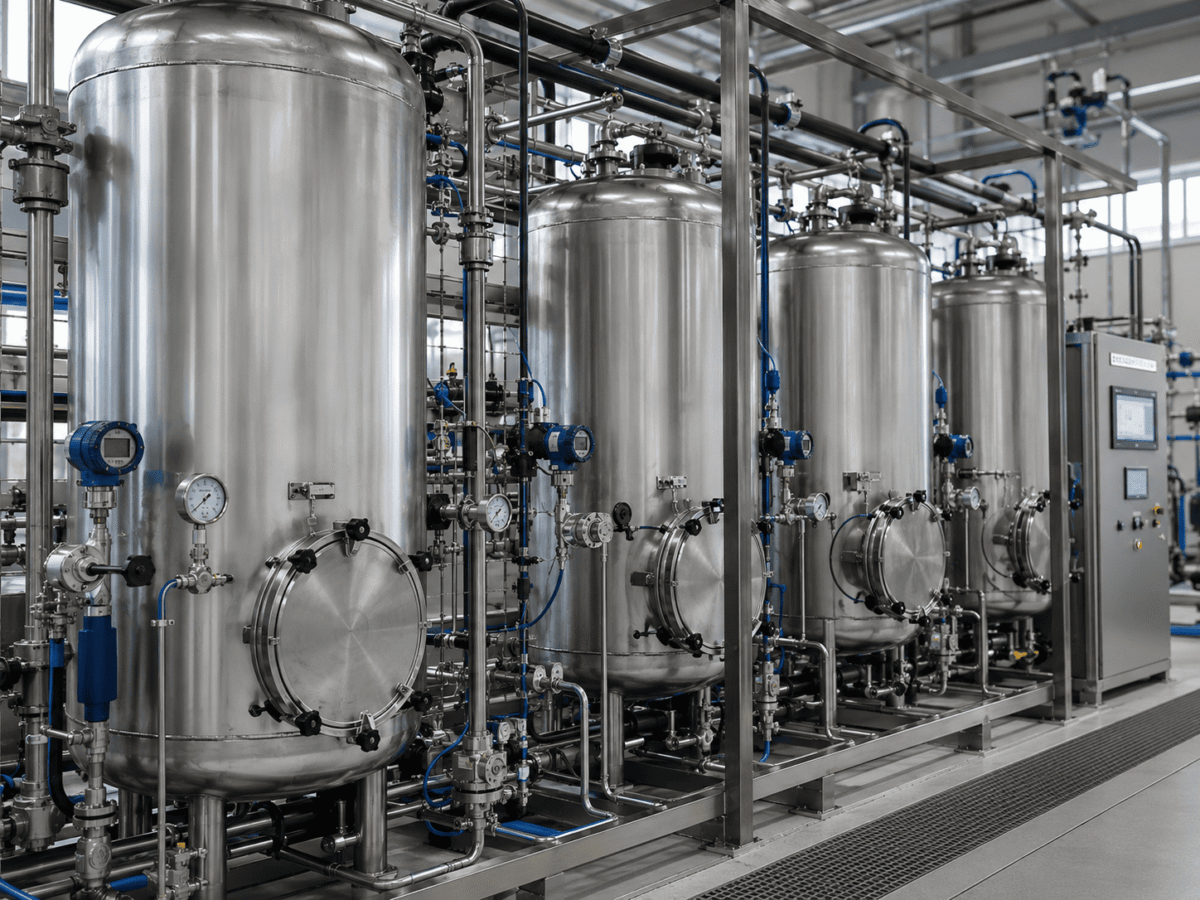
Selective H₂S Treatment at Geothermal Power Plants and Integrated Gas Management
H₂S in non-condensable gas (NCG) is a critical component that requires careful management to address environmental impact, odor control, equipment safety and regulatory compliance.
Tailored to Gas Composition and Site Conditions: Selective H₂S Removal
VERITAS ÇEVRE has developed R&D-driven selective H₂S removal technology tailored to the composition, flow rate and site conditions of NCG streams at geothermal power plants.
Developed through approximately three years of R&D, the technology was tested in a field pilot system operating under actual NCG conditions. H₂S removal efficiency achieved during the pilot application was documented by TÜBİTAK MAM, and the process performance and technical feasibility were verified under real operating conditions.
This selective removal approach integrates controlled H₂S removal, emission management, environmental impact control and plant safety within a unified process design.
We integrate H₂S removal into a comprehensive gas management approach
Gas composition, site conditions, emission management and process safety are assessed together to develop an appropriate system design for each application.
A controlled process from gas characterization to selective removal
H₂S management in geothermal NCG streams is assessed not simply as the removal of one contaminant, but in the context of gas composition and plant operating conditions.
Through R&D studies, process conditions, removal performance and application criteria were evaluated using laboratory and field data to develop the system design approach.
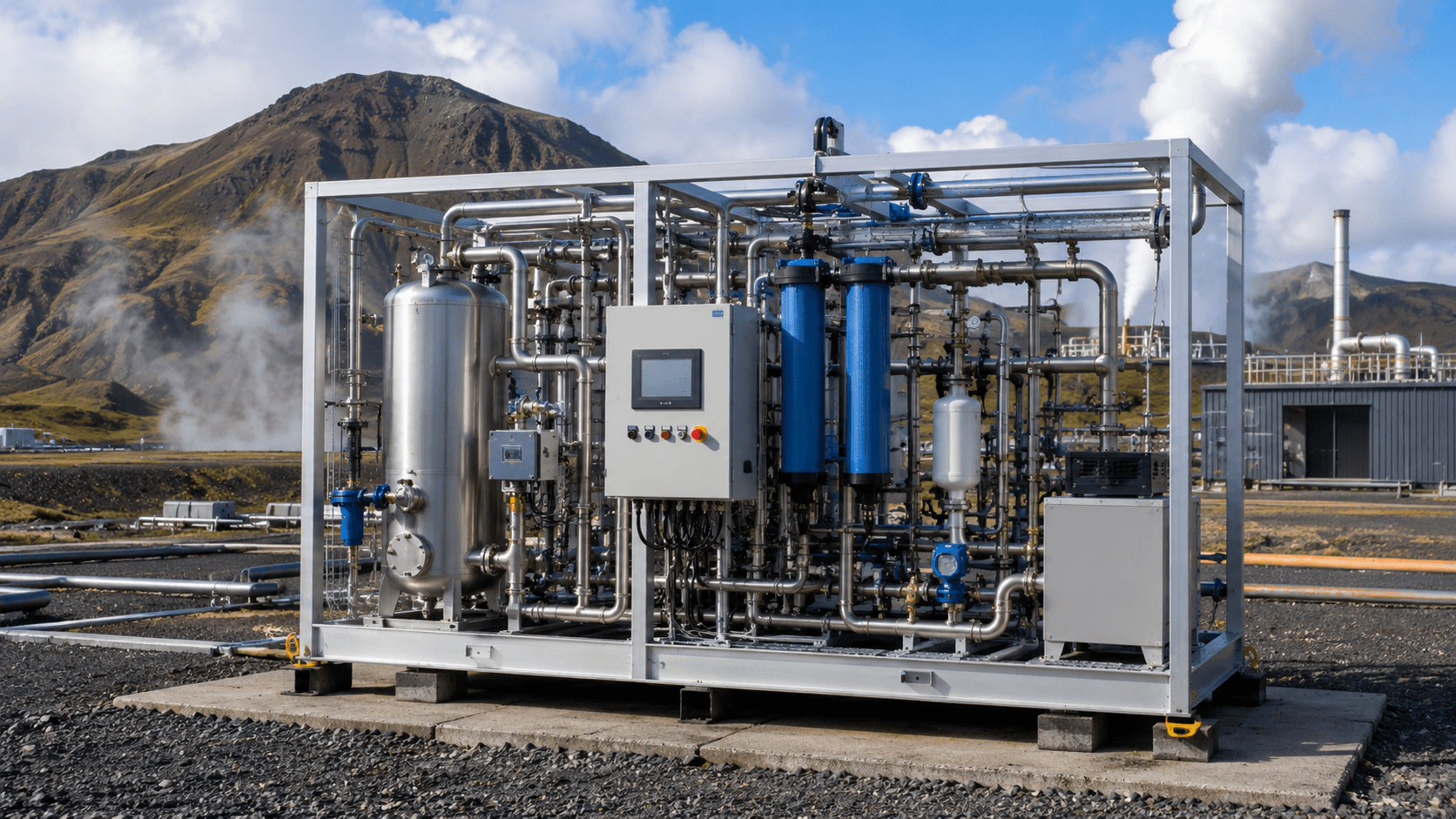
From laboratory studies to field conditions: a validated process approach
Selective H₂S removal performance was evaluated through TÜBİTAK inspection and measurement reports from field applications.
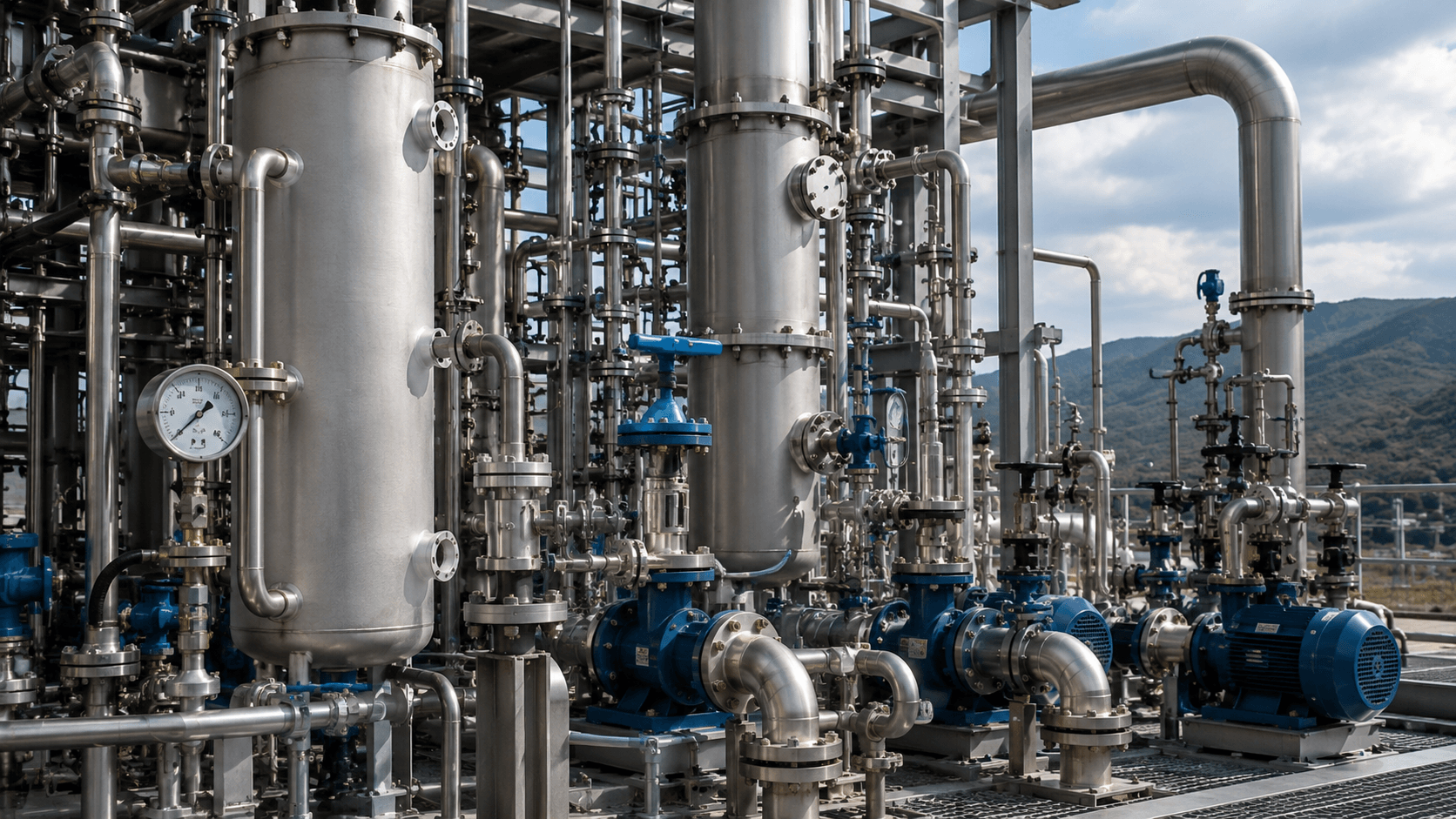
Performance assessed through TÜBİTAK inspection and measurement reports
Selective H₂S removal performance was validated through TÜBİTAK inspection and measurement reports from the field application. Laboratory and field data served as essential engineering inputs for developing system design criteria.
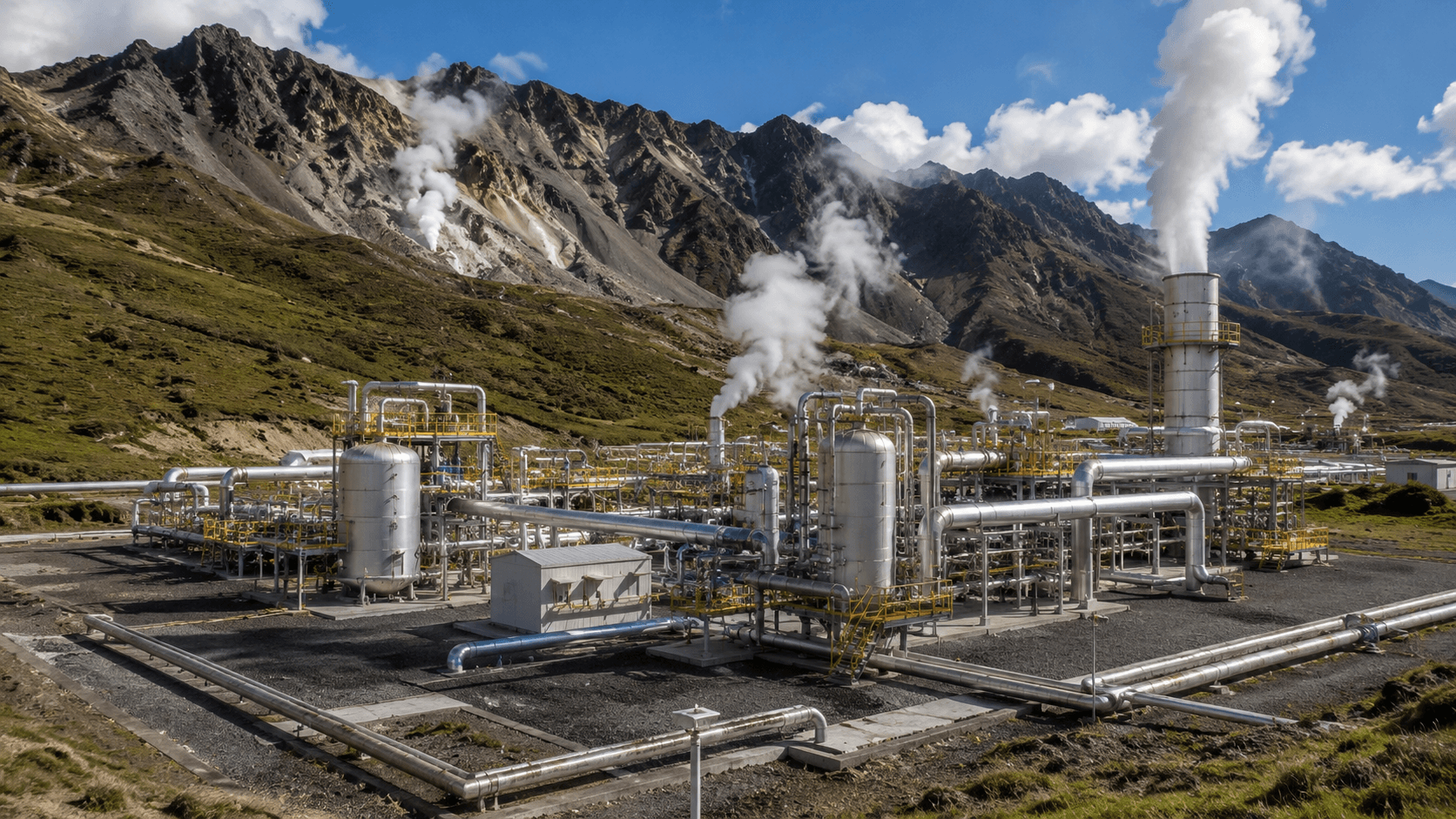
Developing system design parameters for industrial-scale use
Ongoing work aims to refine system design parameters, strengthen the engineering foundation for full-scale industrial installations and further improve removal performance.
In geothermal gas streams: emission and environmental impact control
Selective H₂S removal provides an engineering foundation for reducing environmental impact, supporting odor control and enabling more controlled gas management at the plant.

The developed system offers a practical treatment solution that reduces H₂S concentrations in geothermal NCG to levels consistent with applicable emission limits, helping control environmental impacts. Removal performance achieved in the field pilot system was documented through measurements conducted by TÜBİTAK MAM and verified under real operating conditions.
The ongoing third TÜBİTAK project aims to reduce H₂S concentrations below 1 ppm at lower operating costs and achieve CO₂ quality suitable for recovery. Selective H₂S removal, process control and CO₂ recovery are being developed within an integrated gas management approach.
This approach supports processing CO₂ contained in geothermal NCG to a quality suitable for industrial use and returning it to productive use. The objectives are to reduce direct CO₂ emissions, lower the plant's carbon footprint and strengthen sustainable gas management.
